
When someone experiences a trauma, it impacts the entire family system. Families that include children navigate unique stressors related to supporting those children. Trauma survivors may have children, grandchildren, nieces, nephews, young cousins, or other children in their lives who need adjustment support, especially during a survivor’s hospitalization.
When a loved one is hospitalized, children may experience a range of emotions such as anger, guilt, jealousy, confusion, fear, worry, and more. It is important for these children to know that anything they feel is okay.
Commonly, while dealing with these feelings, children may exhibit behavioral changes. They may have changes to their eating habits, begin struggling in school, or withdraw from things or people they love. They may experience denial, or act disinterest when visiting a survivor. Young children may regress in some developmental milestones such as potty training, pacifier weaning, or separation anxiety. Older children may experience an increased need for past comfort items and have nightmares or difficulty sleeping. All these reactions are normal and can be addressed in several ways. Here are some tips for caring for children within the family system:
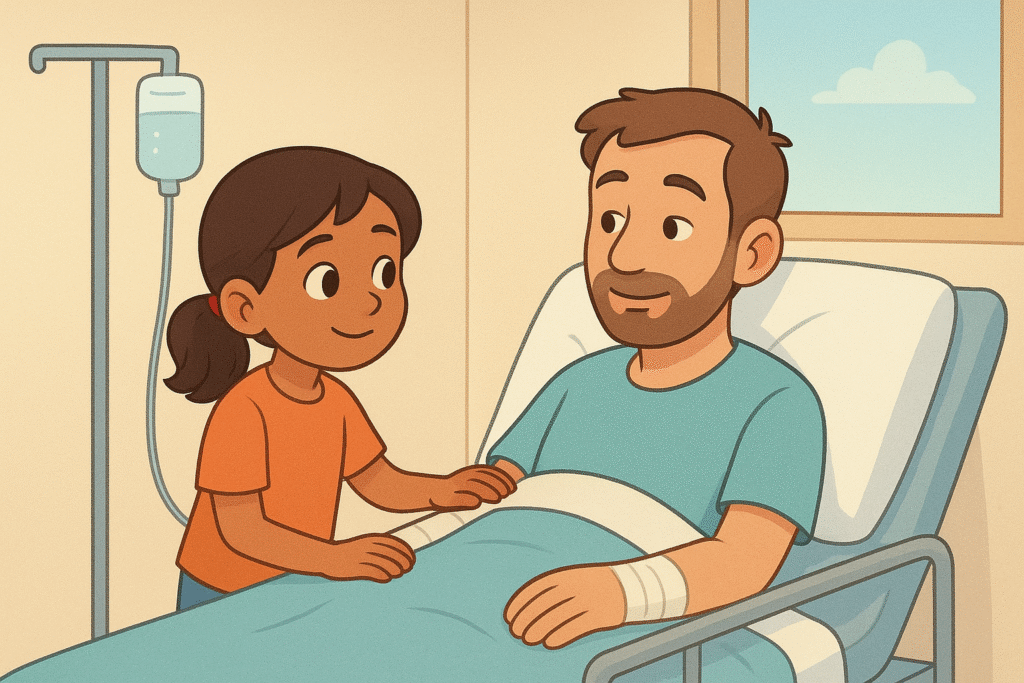
–Maintain routine: Routine is a simple and effective way to help a child feel safe and supportive. If possible, maintaining their post-trauma routine will offer them comfort. If their routine must change due to the trauma, finding a new routine (even if temporary) can help them navigate their emotions more effectively. Keeping the child in school and after school activities and working visiting the survivor into that routine is an ideal way for children to worry less about unexpected changes. Use of a visual calendar during this time can be helpful for children, especially if their pre-trauma routine must be adapted.
– Be as honest as possible: Often, we as adults worry about sharing too much information that might be scary or confusing to children. While that concern is valid, children are more likely to develop misconceptions that could be even more scary and confusing than the truth. Providing concrete information about the survivor’s injury, answering children’s questions fully, and being honest about our own confusion and fear all can help children develop a basic understanding of what’s happening and prevent misconceptions.
–Maintaining connections: Being disconnected from someone you love is always challenging. For children, there are many ways we can foster a connection, even if the child is unable to visit the survivor, or unable to engage with the survivor in the same way. Drawing pictures for the survivor, writing letters to them, or helping to create a care package for them can help the child feel as though they are making a difference in the recovery and care of the survivor. Children often love to be ‘helpers,’ so a task for them can increase that bond and connection with the survivor.
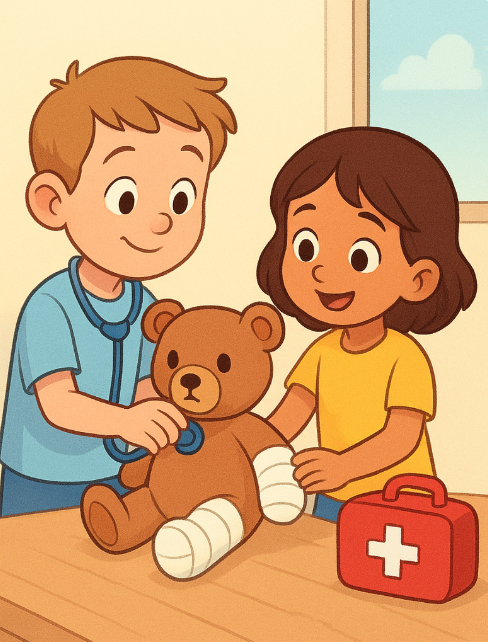
–Importance of Play: Children process the world through play. During times of stress, a child’s play may change as they process. Children may begin exploring themes of death, trauma, pain, or illness in their play. While it may be alarming, it is important that they are able to play through these themes, and their play could provide insight into misconceptions they may have. Children may want to participate in the same play repeatedly, which can be exhausting for caregivers. Allow children to repeat that play as much as they need, and if it becomes overwhelming for the caregiver, reach out in your support system.
These are just some ways to support a child who loves a trauma survivor. There are many resources that can help caregivers and children throughout their experiences. Here are a few:
For Parents/Caregivers:
“Kids Worry Too” from Nebraska Medicine Link
“Tips for Children Visiting the Hospital” from University Of Maryland Medical System link
“Talking to Kids about Serious Illness” from SickKids link
Looking for resources for kids? Check out the books listed under “Dealing with Emotions” “For Community Members” and “General Hospital” in the TSN Pediatric Positive Representation Library.
About the Author:
Jackie Newman is a Certified Child Life Specialist specializing in working with patients with traumatic injuries such as brain injuries and spinal cord injuries. Beginning her career at rehab, Jackie developed a passion for working with adolescents, young adults, and their families. Now, Jackie is blazing a trail as one of the first Certified Child Life Specialists dedicated to an adult trauma unit: Shock Trauma Center at University of Maryland Medical Systems. Jackie serves adolescent and young adult patients helping support them on the first step of their journey to recovery.