
The Other Side of Trauma:
The Ones Who Hold the Story but Not the Spotlight
When a traumatic event occurs, whether it is a serious accident, sudden illness, violent act, or loss, we often turn our attention to the person at the center of the story. Communities gather around the survivor or the grieving family. Fundraisers are organized, meals are delivered, prayers are offered, and words of support fill social media. Our compassion is real and necessary.
But trauma doesn’t stop with the survivor. It extends outward. It’s like a stone thrown into water, sending ripples across everyone connected to the event. Family members, friends, caregivers, witnesses, first responders, medical professionals, therapists and even people who only hear about the experience. Each person is impacted in different, often unseen ways.
It’s a natural instinct to focus on the survivor because we see their injuries, hear their story, follow their medical journey, and recognize their suffering. In many ways, they become the symbol of the tragedy. Yet in doing so, we often overlook the quiet struggles of those standing beside them.
Parents sit through sleepless nights in hospital chairs. Spouses suddenly take on new roles and become caregivers, financial providers, and emotional anchors. First responders replay the scene long after they’ve left it. Doctors and nurses carry the weight of hope, fear, and sometimes loss. Therapists and psychologists listen as survivors try to make sense of what happened, absorbing story after story of pain and scattered memories. Even neighbors, classmates, coworkers, and people who may barely know the survivor, feel the impact simply because it happened close to home. Exposure to trauma from any distance highlights the realization that trauma does not discriminate. It could have been them, or their child.
Trauma doesn’t belong to one person. Its ripple effect creates a shared emotional experience, touching both those who know the survivor and those who don’t. The event becomes part of the community’s story, talked about in grocery stores, schools, churches, and workplaces.
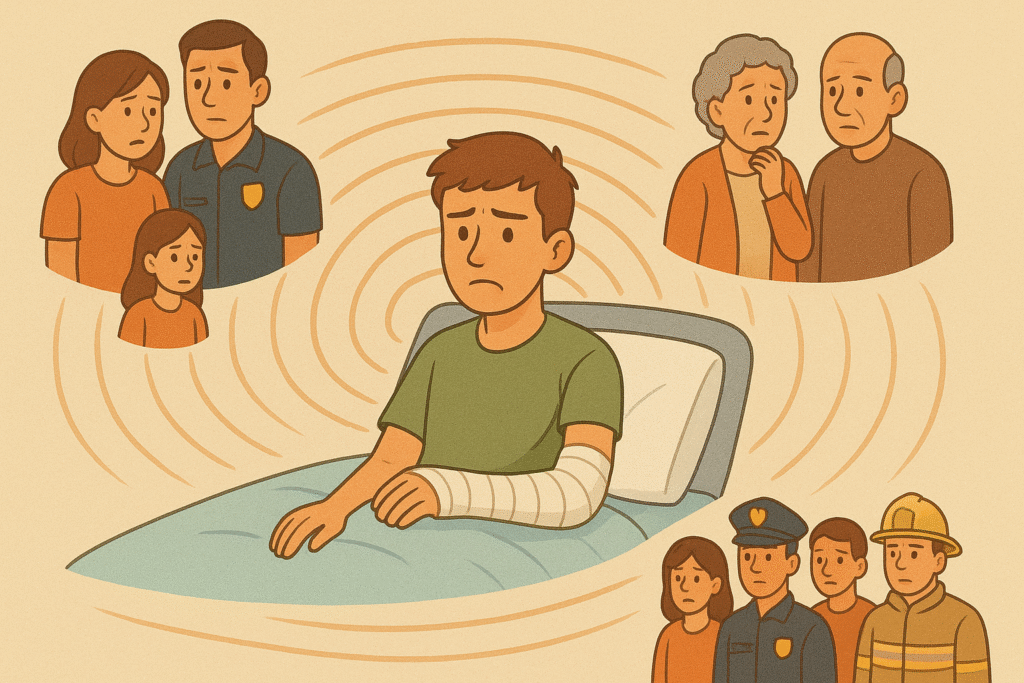
But shared trauma often comes with silent suffering. Many caregivers push their suffering aside and feel guilty about feeling stressed or overwhelmed because, “I shouldn’t feel this way”, or “I wasn’t the one who went through it.” Over time, the mental effort it takes to ignore the compounding layers of stress, can lead to burnout, compassion fatigue, anxiety, depression, or the return of old coping behaviors like alcohol or substance use.
Unaddressed suffering doesn’t disappear. It crawls through the cracks and finds its way to the surface. It’s a secondary trauma where the ripple effects of the event continue.
If we truly want to support survivors, we must also support the people who care for them, stand beside them, and witness their pain. When we acknowledge the ripple effect of trauma, we create space for honesty and support. It’s in this space that we can listen, not to compare suffering, but to understand it. We begin to see that trauma doesn’t isolate us, instead, it connects us. And it’s in that shared understanding that healing begins.
Although trauma may start with one person, recovery requires all of us.
About the Author:
Nancy Musarra, Ph.D.
She is a licensed clinical psychologist in Independence, Ohio. She is also a published author with over 20 years of clinical experience. Her expertise lies in helping first responders, parents, and individuals understand the complex world of mental health and developmental disabilities.