
KD’s Testament

My story is one of faith, adversity, and purpose.
I was a former SEC football player at Ole Miss working toward my NFL dream when everything changed in an instant because of a tragic car accident that led to the loss of my right leg below the knee. In that moment, the life I had planned was completely redirected.
In the middle of that experience, I leaned on my faith. I chose to trust God even when I didn’t fully understand what the future would look like. Instead of allowing the situation to define me, I began to believe it was shaping me for something greater than football.
Through recovery, rehab, and reflection, I started to understand that my identity was never meant to be rooted in the game, but in purpose. That realization opened the door for me to step into speaking and sharing my story with others.
Today, I use my voice to encourage people that setbacks do not cancel purpose. Often, they reveal it.
In the moment I woke up after my right leg was amputated, I remember seeing my mom with tears rolling down my face, and I said, “Mama, I made it.” In that moment, I wasn’t focused on what I had lost. I was focused on the honor and the privilege of still being above the ground and not in it. But the most powerful part of that moment came right after. I saw a Bible in her hand and I said, “Mama, can you feed my spirit?” Because I understood early on that if I was going to walk through this next chapter of my life, I could not have a malnourished spirit.
That moment shifted everything for me. It redefined what it means to live fully not based on physical ability, but on spiritual strength, mindset, and purpose. Life after trauma became less about what I lost and more about what I still had and how I could use it to serve others. That was the beginning of me truly understanding that I was still here for a reason. My recovery was a process of rebuilding in every sense of the word. Physically, it required time, patience, and consistent rehabilitation as I adjusted to life after losing my leg. There were new routines to learn, strength to regain, and a completely different way of moving through everyday life. Mentally and emotionally, it was just as important. I had to process the reality of what had happened while also choosing not to let it define the rest of my life. There were moments that required reflection, faith, and a decision to keep moving forward even when it felt unfamiliar.
What stood out most in my recovery was not just what I was overcoming, but what I was becoming. It shifted my mindset, strengthened my faith, and helped me see purpose in a way I had never seen before. Looking back, my recovery wasn’t just about healing from what I lost. It was about being shaped into who I am today. What helped me push through my recovery process was a simple mindset shift: “I get to.” I get to wake up today. I get to move forward. I get to try again. That perspective changed everything for me. Instead of focusing on what I lost, I focused on what I still had and what I still had the opportunity to do.
My faith in God was the foundation of that mindset. There were moments where I didn’t fully understand the process, but I trusted that my life still had purpose. That belief gave me strength when things were uncomfortable, uncertain, or difficult. Combining gratitude with faith helped me keep going. Every step of recovery became less about what I was going through and more about what I was getting to walk into. To me, being a survivor is not just about making it through a traumatic moment. It’s about what you choose to do after it.
A survivor is someone who continues to show up to life even when things are different than they once were. It’s learning how to adapt, rebuild, and keep moving forward with purpose, even when the path is uncertain. Being a survivor also means refusing to let your hardest moment become your final identity. It’s acknowledging what happened, but not allowing it to define your worth or your future. For me, being a survivor is tied to faith. It’s understanding that I am still here for a reason, and that my story is not just for me, but for others who may need hope in their own battles. It is not just about surviving the trauma. It is about allowing that experience to transform you into someone who can encourage, strengthen, and impact others who are still in the middle of their fight.
Through my recovery journey, I learned that I have the heart of a lion. Because no matter if a lion is wounded or injured he licks his wounds and keeps walking. I learned that I am stronger than I ever gave myself credit for, not just physically, but mentally and spiritually. I discovered that adversity doesn’t break you unless you allow it to, and that mindset plays a powerful role in how you respond to life’s hardest moments. I also learned the importance of faith, patience, and perspective. There were moments that required me to slow down, reflect, and trust that my story wasn’t ending it was just the beginning. Most importantly, I learned that purpose can come from pain. What I went through didn’t define me, but it refined me. It shaped me into someone who now uses his voice to encourage others to keep going, no matter what they face.
The role of community and connection has been one of the most important parts of my recovery journey. I learned quickly that you don’t heal in isolation. You heal through people, through support, encouragement, and being reminded that you are not alone in what you are facing.
My mom has been one of the strongest examples of that in my life. She has the heart of a lioness. Her strength, her love, and her ability to keep pushing forward no matter what life brings has shaped me deeply. I often say that I have the heart of a lion because I watched her live with that same courage. She taught me what strength really looks like through how she showed up for me during my journey.
My children are my “why.” Everything I do is connected to them. How I respond to adversity is not just about me. It is shaping what they will believe is possible for themselves. I want them to see resilience lived out, not just spoken about. I want them to understand that challenges don’t define you, your response does.
Community, family, and connection remind me that I am never walking this journey alone. They give meaning to the process and fuel me to keep going, not just for myself, but for the people who are watching my life unfold.
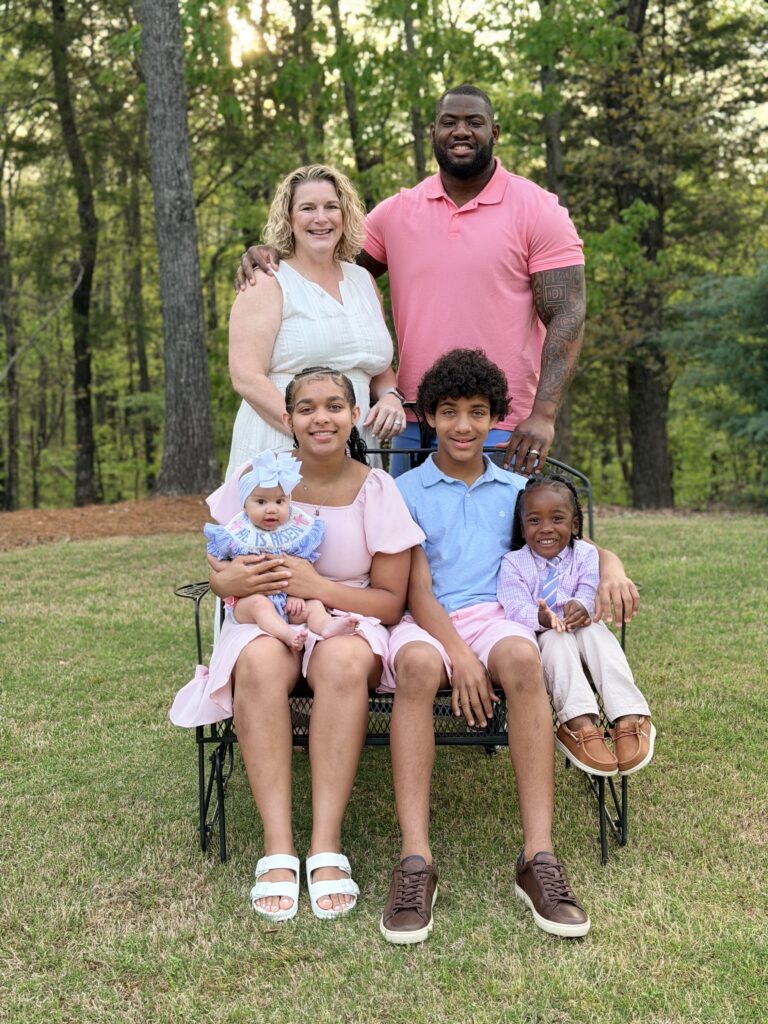
The ongoing challenges I face are a part of life as an amputee. It’s learning how to rewalk again, adjusting to a prosthesis that is not naturally part of my body, and dealing with the physical realities that come with it such as discomfort, blisters, and the ongoing process of adaptation. There are days when it requires patience, adjustment, and simply pushing through what others may never have to think about. But even in those moments, I’ve learned how to remain grounded in joy. I find joy in the simple fact that I have breath in my lungs and purpose in my life. I believe God is not finished with my story, and that gives me strength beyond my circumstances. I also find deep joy in being present with my children and knowing that my life is still impacting theirs.
For me, gratitude is everything. I often say gratitude is the attitude that determines your latitude. When I choose gratitude, it shifts my perspective and reminds me that despite the challenges, I still have so much to be thankful for and so much to give.
I wanted to join the Trauma Survivors Network and share my story because I understand what it feels like when life changes in an instant, and I also understand the power of hearing from someone who has made it through that kind of moment. My experience taught me that trauma can feel isolating, but it doesn’t have to define a person’s future. I wanted to be part of something that helps others feel seen, supported, and encouraged in their own recovery journey. Sharing my story is not just about what I went through, but about what came after faith, resilience, and learning to rebuild purpose from pain. If my journey can give someone else hope, strength, or even just the courage to take the next step, then it’s worth sharing. Being part of this network allows me to turn something very personal into something meaningful for others who are walking a similar road.
What I wish everyone could know about surviving traumatic injuries is that survival is not just a moment, it’s a process. People often see the visible part of recovery, but they don’t always see the daily adjustments, the patience it takes, and the internal work that comes with rebuilding your life in a new way. It’s not just physical healing, it’s mental, emotional, and spiritual realignment. I also wish people understood that surviving trauma doesn’t mean you are the same person you were before. In many ways, you become someone new. But that doesn’t mean you are less than. It often means you are stronger, more aware, and more intentional about life. For me, surviving traumatic injury also became a reminder of gratitude. I learned to value simple things like breath, movement, and presence with my children in a deeper way than before. Most importantly, I wish people knew that surviving is not the end of the story. It can actually be the beginning of purpose, impact, and a life that helps others find hope in their own battles.
Over time, my understanding of strength and resilience has completely evolved. I used to think strength was physical: what you could do, how fast you could move, or how well you could perform under pressure. But life showed me something different. Real strength is mental. It’s the ability to stay grounded when everything around you changes. It’s choosing to keep going when things don’t look the way you planned. It’s learning how to respond, not just react, when adversity shows up. Through my journey, I’ve learned that resilience is not about avoiding hardship, but about how you carry yourself through it. It’s faith, mindset, and discipline working together when motivation fades. Today, I define strength not by what I can lift or how I perform physically, but by how I think, how I show up, and how I continue to push forward with purpose even after life has tested me.
If it didn’t create you, it can’t break you.
To anyone who has recently experienced a traumatic injury, I want you to know that your life is not over, even if it feels like everything has changed in an instant. In this moment, it may feel like loss is the loudest voice in your life, but it does not get to write your ending. Give yourself grace in the process. Healing is not instant, and it is not always linear. There will be hard days, confusing days, and days where you simply have to take things one moment at a time. That is okay.
What I have learned is that you are still here for a reason. Your story is not finished, and this moment does not define your full identity. There is still purpose ahead of you, even if you cannot see it yet. Lean into faith, lean into support, and don’t isolate yourself. The strength you are going to discover in yourself will often surprise you. And most of all, remember this: you are not just surviving what happened to you, you are still becoming who you are meant to be.