
Pack your Bags: Travel Tips
Whether you are traveling for work, a follow up medical appointment, or a well deserved vacation, getting from one place to another can take a little extra planning after an injury. There are little things you can do to make your travel plans less stressful and skip the pain and headaches that many trauma survivors and families associate with post-injury travel.
Plan Ahead
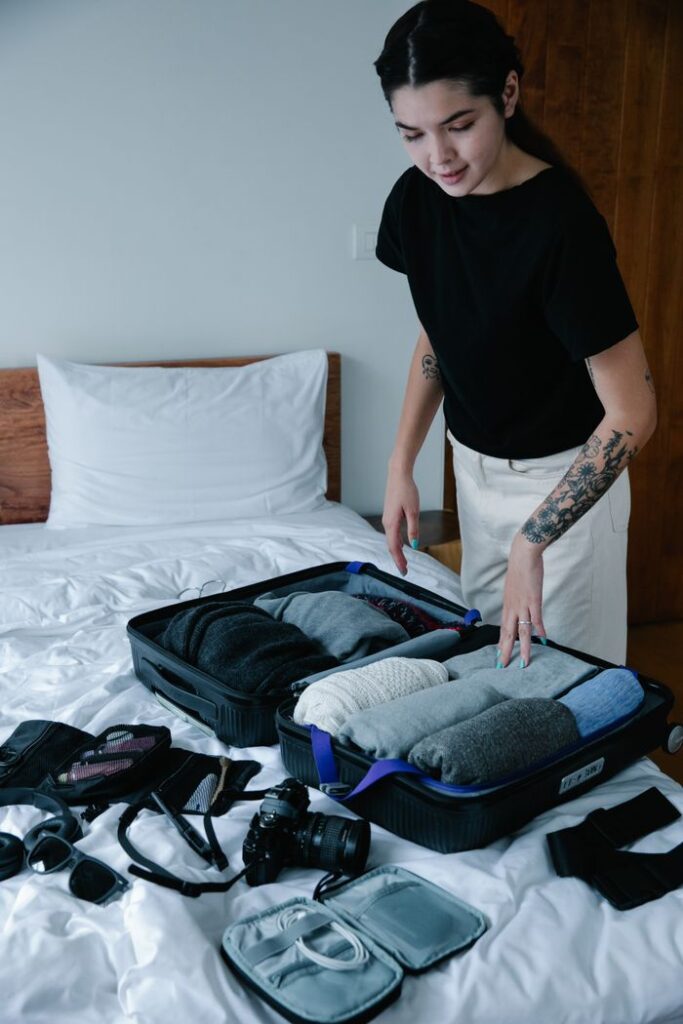
When packing, think about what helps you have a good day at home and bring those same supports with you. Additionally, pack a bag that stays with you. In this bag, keep all your medications (and make sure the name on your prescription bottles matches your id!), medical supplies, snacks, water, and important documents. You don’t want to place anything difficult or impossible to replace in large luggage that may be separated from you during travel.
Speaking of separated from you, especially if you are traveling by plane, clearly label all your mobility equipment with your contact information. The US Department of Transportation also points out that Because airline personnel may not be familiar with your particular assistive device, you may want to provide written instructions detailing the disassembly, assembly, and stowage of your device; and take a picture of your device before your flight to capture its condition.
Most importantly, pack with practicality in mind. After your injury, you may have limitations related to lifting or carrying weights. Focusing on packing what you need can help keep your luggage limited in number and weight.
On the Road
Long car rides can be hard physically. Look ahead on your route and plan breaks every couple of hours to stretch, walk around, and change positions. If it is a route you take often, you may start having favorite rest spots. For one of my common travel routes, there is a rest area that is always clean, has free coffee in the winter and wild raspberries to pick in the summer. I always plan to stop there to stretch, rather than pulling into a parking lot off an exit instead. Knowing your stops can help them feel mentally as well as physically refreshing.
Keep a comfort kit within easy reach. This could include water, healthy snacks, and a small pillow. Depending on your body, you may want to consider a heating pad that plugs into your vehicle or crack-and-use ice packs to ease discomfort.
One family traveling to a medical appointment learned that stopping for ten minutes every few hours actually helped them arrive sooner. The short breaks prevented pain and fatigue from building up, so they did not need a long recovery stop later.

Traveling by Train
While train travel is not available everywhere, there are some benefits to traveling by train. Trains often give you more room to move around than cars or airplanes. You can stretch or walk regularly throughout your trip.
If your train has connections or starts or ends at a large station, talk to staff to see if they can provide transport assistance throughout the stations.
Flying with Confidence
Airports can be noisy, bright, and busy. Arrive early so you have plenty of time. If crowds or noise make your symptoms worse, bring sunglasses, headphones, or earplugs, and find a quieter place to wait before boarding.
One traveler shared that the best decision they made was asking for wheelchair assistance at the airport. Even though they could walk short distances, saving their energy in the airport meant they had enough left to enjoy their trip instead of feeling exhausted before they even boarded the plane.
Give Yourself Permission to Travel Your Way
Not every trip has to be packed with activities. It is okay to build in rest breaks, order takeout for the hotel room instead of eating out, or leave an event a little early if you need to.
Travel after an injury may look different than it did before, and that is okay. The goal is not to do everything. The goal is to get where you want to go safely, comfortably, and with enough energy to enjoy the moments that matter most.