
Grounded & Supported:
A learning and support group for TSN peer volunteers
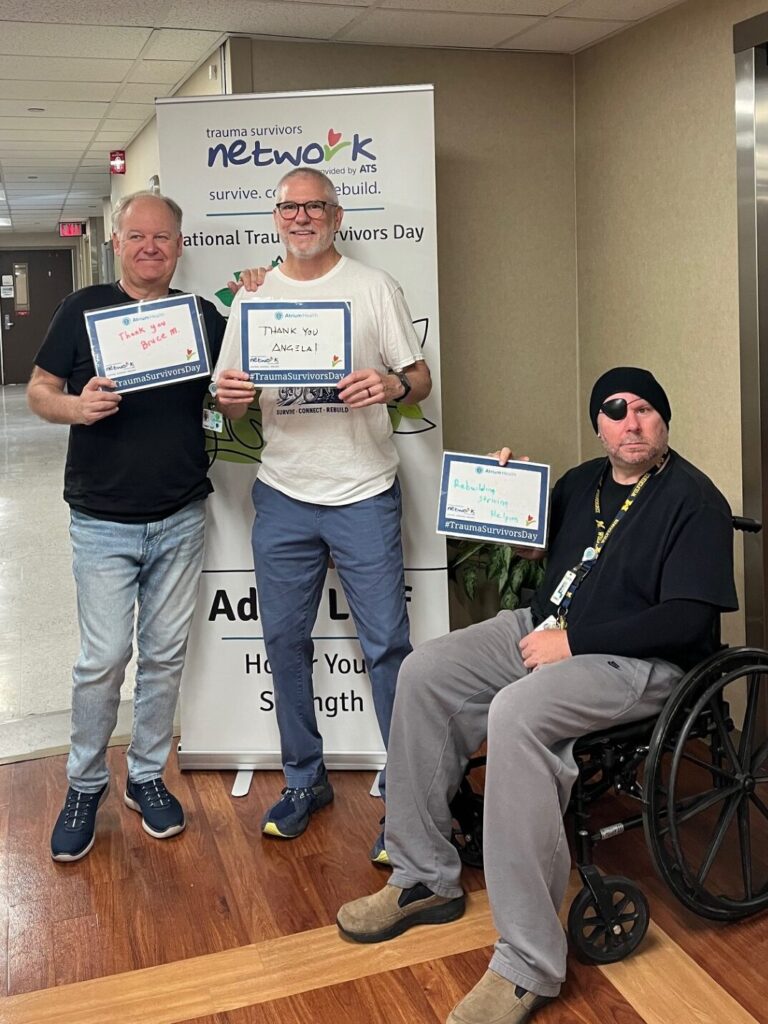
Earlier this year, nine TSN peer support volunteers gathered in Charlotte, NC to discuss the impact exposure to traumatic experiences can have on a person’s wellbeing. The gathered volunteers had the unique opportunity to reflect on themselves and how they feel after visiting patients to provide peer support. Across TSN sites, peer support volunteers meet with patients and their families on some of their most difficult days. The impact volunteers have while being present with people to show them they are not alone is profound. Hope and healing are possible through connection and shared experiences.
While this work is meaningful and important, it can be emotionally costly to the volunteers who serve patients at the hospital and sometimes on the floors, units, and rooms where they were a patient once themselves. Repeated exposure to trauma, whether revisiting your own or seeing someone else’s, can be emotionally taxing to helpers in those spaces. This experience is called secondary traumatic stress (STS), or vicarious trauma. In Charlotte, the team at Atrium Health Carolinas Medical Center partnered with the University of North Carolina at Charlotte’s School of Social Work to educate and support local TSN volunteers. They piloted a program called Grounded & Supported: A learning and support group for TSN peer volunteers.
Over the course of 4 weeks, volunteers gathered to talk about secondary stress, the ways volunteers are exposed to stress, and how they can prepare as individuals and as a group to prevent vicarious trauma from being emotionally disruptive in their lives. During the final session, the group created a toolkit for stress prevention that was shared with all Charlotte area TSN volunteers and represented the practical and shared knowledge gained from the group.
Supporting volunteer mental health as they serve in these vital roles is important, and there is still more work to do. Volunteers who participated in this shared learning experience shared the healthy and sometimes unhealthy ways that they respond to the stress of their role. Volunteers shared that discussing their experience of stress and trauma with other volunteers who understood and had shared experiences was vitally important to their mental health. If you are interested in learning more about preventing secondary traumatic stress and burnout in a peer support role, check out the brochure below, which highlights key takeaways from Grounded & Supported.