
November is often a time to think about gratitude. Gratitude can be a meaningful part of recovery, but it can also feel hard to be grateful after an injury.
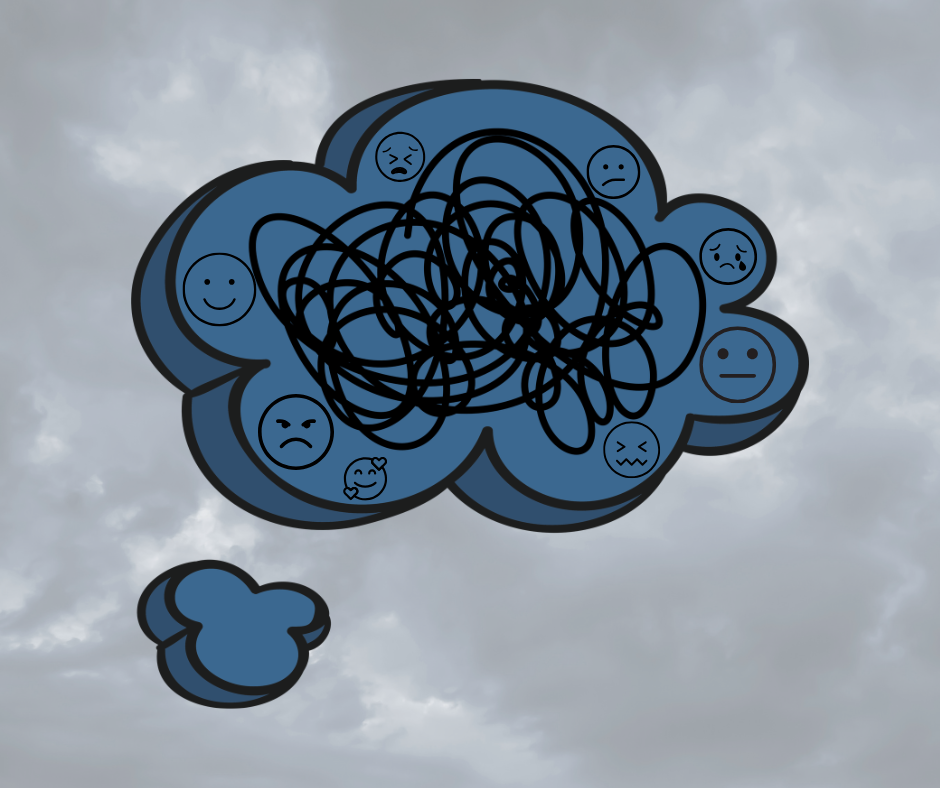
After an injury, people may encourage you to look on the bright side. They may say, “At least it wasn’t worse,” “Just stay positive,” or “Everything happens for a reason.” These words are often meant to help. But they can also make you feel like their hard feelings are not okay. You may start to wonder if you are doing recovery wrong, if you should be more grateful, or why you are still upset when other people have it worse.
Before we move forward, let me pause to make this very clear: You have the right to your feelings.
You may be thankful to be alive and wish the injury had never happened. You may love your family and feel frustrated with them. You may be proud of how far you have come and miss the life you had before. The word “and” can be powerful because it lets you hold two truths at once. Instead of saying, “I am frustrated, but I should be grateful,” you might say, “I am frustrated, and I am grateful for the people helping me.” You do not have to erase one feeling to make room for another.
Gratitude isn’t about ignoring the hard feelings or only focusing on the positive. It’s about knowing more than one feeling can be true at a time, and still choosing to recognize the people, moments, and things that bring meaning, comfort, or support to your life.
“Toxic positivity” is not a medical diagnosis. It is a term used to describe pressure to be positive in a way that pushes away or ignores difficult feelings. Positive thinking can be helpful, but there is a difference between finding hope and being told that you should not feel bad. Saying, “I know this is really hard, and I am here with you,” makes room for someone’s experience. Saying, “Try to think positive,” may unintentionally send the message that difficult feelings should be pushed aside. Trauma-informed support starts with listening, acknowledging what is hard, and allowing people to have their own feelings.
Researchers have studied gratitude for many years, and their results show that gratitude activities are linked with better mental health, more positive emotions, and fewer symptoms of anxiety and depression. But gratitude is not a treatment for trauma or a cure for depression, anxiety, grief, or other challenges. The effects of gratitude activities are usually modest and can vary from person to person. That matters because you do not have to force yourself to feel grateful. You do not have to keep a gratitude journal, and you do not have to find three good things every day. If a gratitude practice feels helpful, use it. If it does not feel helpful today, that is okay too.
Sometimes what you need is not a gratitude exercise. Sometimes you need help. You may need to talk with your healthcare team about pain or other symptoms. You may need more help at home, a ride, an accessibility accommodation, time away from caregiving, or someone to listen. You may need professional support for your mental health.
Gratitude does not mean pretending that everything is okay. If something is not working, it is okay to say so. If you need help, it is okay to ask. Being grateful for the people and resources you have does not mean you have to accept problems that could be addressed. You can appreciate what is going well and still speak up about what needs to change.
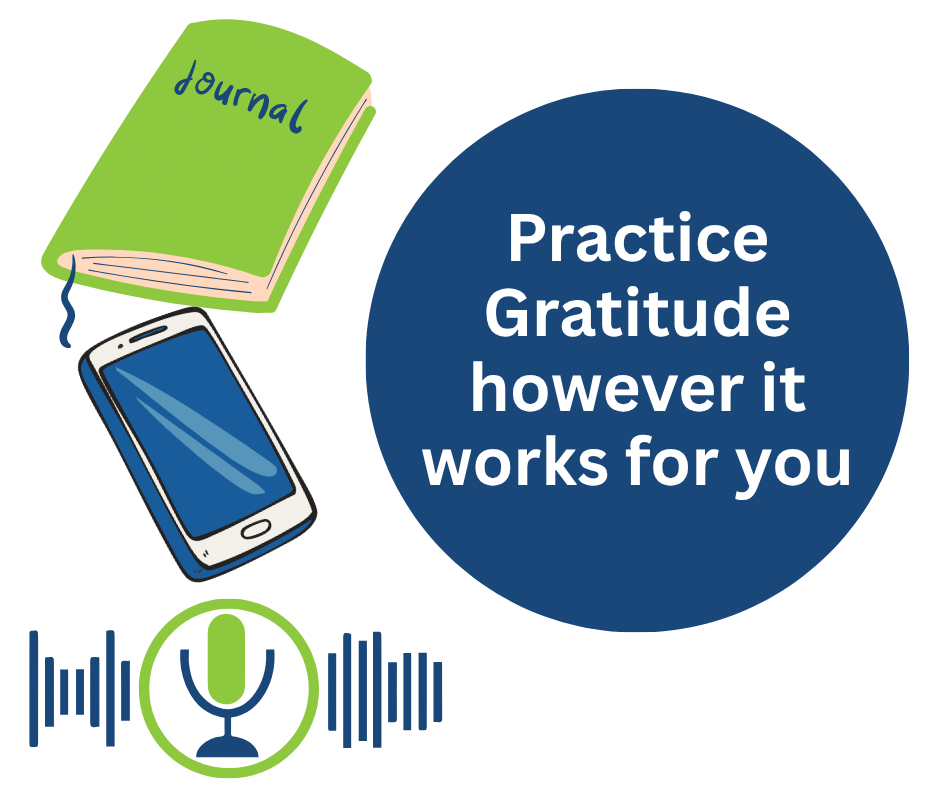
If you want to start a practice of gratitude, there are many ways to do it.
- You can start very small. You might be grateful for a good cup of coffee, a favorite song, a funny text from a friend, a warm blanket, a good night’s sleep, a sunny afternoon, a meal someone made for you, a healthcare professional who listened, a few minutes without pain, or a moment when something felt easier. Small things matter. Recovery is made up of small moments, too.
- Try asking different questions. Instead of asking, “What am I grateful for?” you might ask, “Who helped me today?” “What made today a little easier?” “What is something I want to remember?” “What am I proud of myself for?” “What do I need right now?” or “What is something I want to carry with me into the next season?
These questions can help you notice what matters without asking you to ignore what hurts. You may find that gratitude is less about making a list of everything that is good and more about paying attention to the moments, people, and experiences that have meaning for you.
This November, give yourself permission to notice the good without hiding the hard. Be thankful for the people who support you. Notice the small moments that bring comfort. Recognize your own effort. Ask for what you need. Remember that you can be grateful for what you have without being grateful for what happened to you. You can have hope without pretending things are easy. You can be healing and still have hard days. There is room for all of it.