
Self Care for Caregivers:
Caring for Yourself throughout Recovery
When someone you love is injured, your world can change too.
Beyond the trauma of being at the bedside, you may suddenly find yourself helping with appointments, medications, transportation, meals, household responsibilities, communication with healthcare providers, finances, work, children, or daily activities. You may be learning things you never expected to learn while also trying to support someone you love through a difficult and uncertain time.
There is no single caregiving experience. In the hospital, you may be focused on understanding what happened and making decisions one day at a time. During rehabilitation, you may be helping with appointments, exercises, transportation, or new routines. After returning home, responsibilities may shift again as your loved one regains independence, adapts to lasting changes, or learns how to manage life after injury. Sometimes the person you love may need less hands on assistance but more emotional support. In other situations, physical or cognitive changes may mean that caregiving responsibilities continue for months or years.
You may not think of yourself as a caregiver. You may simply think, “I am their spouse,” “I am their parent,” “I am their child,” “I am their partner,” or “I am their friend.” Whatever word you use, supporting someone through recovery can be demanding. And caring for yourself is not something you have to earn after everyone else’s needs have been met.
Research involving family caregivers consistently shows that caregiving can affect stress, mental health, physical health, quality of life, and overall well being. Research specific to traumatic brain injury has also found high rates of fatigue, anxiety, depression, burnout, and reduced well being among family caregivers. That is why caregiver support matters throughout the recovery journey, not only during a crisis.

The phrase “self care” can sometimes sound unrealistic when you are exhausted and responsible for someone else’s needs. Self care does not have to mean a spa day, a weekend away, or adding another task to your already full schedule. Sometimes self care looks like sleeping while someone else sits with your loved one. Sometimes it means eating lunch instead of realizing at 4 p.m. that you have not eaten all day. Sometimes it means asking someone else to make the phone call, drive to the appointment, pick up groceries, or handle dinner.
And sometimes self care means recognizing that you are struggling and talking with someone about it. A useful way to think about self care is not as something extra, but as support for the person doing the supporting.
Self-Care Tips for Caregivers
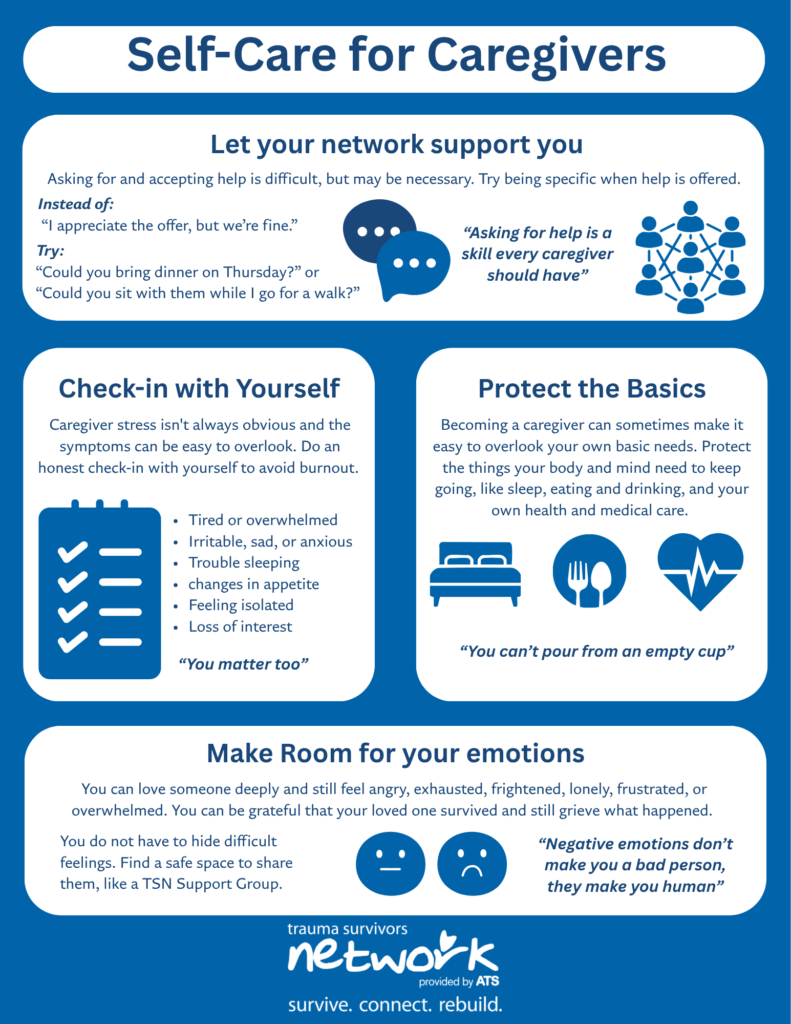
- Let your network support you! Asking or accepting help can difficult. Asking for help is a skill every caregiver should have, because it is a strength, not a weakness.
Try being specific when someone offers to help.
Instead of: “I’ll let you know if we need anything” or “We’re fine”
Try: “Could you bring dinner on Thursday?” or “Could you sit with them while I go for a walk?” - Caregiver stress isn’t always obvious. You may notice that you are more irritable than usual. You may have difficulty sleeping, feel constantly worried, lose interest in things you normally enjoy, or feel like you cannot slow down. A check in with yourself is not a test you can pass or fail. It is a way to notice what you need before your burnout.
- Protect the basics. Becoming a caregiver can sometimes make it easy to overlook your own basic needs. Protect the things you body and mind need to keep going. Things like sleep, eating and drinking, and your own health and medical care shouldn’t be put on the back burner.
- Make room for your own emotions. You can love someone deeply and still feel angry, exhausted, frightened, lonely, frustrated, or overwhelmed. You can be grateful that your loved one survived and still grieve what happened. You can be hopeful about recovery and still have days when you feel discouraged. You can want to help and also wish that you could have your old life back. These feelings do not make you a bad caregiver. You do not have to hide difficult feelings, but find a safe space to share them, like a TSN Family and Caregiver Support Group.
Care for yourself because your needs matter too!